

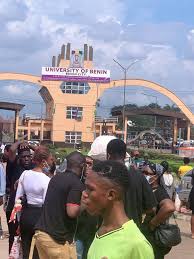
Corruption and the battle to save Nigeria’s universities
Oyewole O. Sarumi PhD
(Digital Transformation Architect and Leadership Specialist)
Introduction – A crisis that can no longer be managed in whispers!
There is a particular kind of pain that comes from watching as an institution that once represented the highest aspiration of a people slowly consumes itself from within.
Nigeria’s public universities were, in their founding generation, genuine engines of national possibility.
They attracted lecturers from across the Commonwealth, drew students from neighbouring countries, and produced graduates who went on to lead governments, build industries, and reshape the intellectual character of a continent.
That era is not a myth. Many of us who have worked within and around this ecosystem for decades were there. We saw it. And because we saw it, we cannot accept what these institutions have become with the indifference of spectators.
In late April 2026, Ola Olukoyede, the Executive Chairman of the Economic and Financial Crimes Commission (EFCC), stood before the 8th Biennial Conference of the Committee of Pro-Chancellors of State Universities in Kano and delivered a verdict on Nigeria’s higher education system that was as sober as it was damning. The EFCC, he said, had investigated cases across tertiary institutions nationwide involving inflated contracts, ghost workers on payrolls, and the outright diversion of funds collected from students as school fees. Each of these, he emphasised, was not merely a financial crime. Each one was a betrayal — of parents who sacrificed to pay those fees, of students who believed their sacrifice would be honoured, and of taxpayers who fund the broader architecture of public education.
This revelation did not arrive in a vacuum. A little over a month earlier, I published an article in THE STATEPOST titled “Leadership Deficit: Why Trillions in Interventions and Untapped Endowments Haven’t Saved Nigeria’s Ivory Towers,” in which I argued that the foundational cancer destroying our universities is not a shortage of funds but a profound shortage of accountable, visionary leadership.
That argument has now been amplified by the highest anti-corruption authority in the country. The ASUU President, Prof. Chris Piwuna, had already sounded the alarm, calling for investigations into how Vice-Chancellors have managed TETFund allocations. The pattern is clear. The evidence is mounting. And it demands a response that goes far beyond the usual ministerial press releases.
This paper is written for leaders in education — Vice-Chancellors, Pro-Chancellors, governing council members, education policymakers, CHROs, and all those who carry institutional responsibility for the quality and integrity of higher education in Nigeria and across Africa. It is an honest reckoning with what went wrong, why it went wrong, and what must be done about it. It draws on current global research, comparative international evidence, and the hard lessons that other nations have already learned.
The question is whether we are prepared to learn them too.
WHAT WENT WRONG: Mapping the architecture of institutional corruption.
To understand how Nigerian universities arrived at a place where the chairman of the country’s premier anti-graft agency is compelled to address their governing councils on basic financial ethics, one must trace the trajectory of governance failure honestly and without the comfort of euphemism.
The rot began with politicisation. Over successive decades, Vice-Chancellor appointments in many Nigerian public universities evolved from processes of rigorous academic meritocracy into exercises in political patronage.
A Vice-Chancellor in this environment is not always chosen because she is the most visionary academic leader available, but because she carries the right political endorsements, satisfies the right ethnic calculations, or has cultivated the right relationships with state governors and federal ministers. When the character of the appointment process is compromised at the root, the character of the institution follows.Into this environment, TETFund poured trillions of naira over two decades. The Tertiary Education Trust Fund was established with a genuinely good intention: to provide a dedicated, consistent revenue stream for capital development in Nigeria’s tertiary institutions, funded by a 2.5% levy on assessable profits of companies operating in Nigeria. By most estimates, TETFund disbursed over N1.5 trillion to Nigerian tertiary institutions between 2011 and 2023. The outcomes, as a systematic review of institutional infrastructure, research output, and global ranking performance would reveal, are grotesquely disproportionate to that investment.The mechanisms of mismanagement are well documented by investigators and whistleblowers alike.
In February 2026, a petition to the National Security Adviser and the EFCC from a whistleblower at Osun State University described what the author called “systemic intellectual terrorism” — funds earmarked for laboratories and staff training allegedly siphoned off, leaving students with paper degrees and no practical competence.
In Taraba State, the Public Complaints Commission launched an investigation into TETFund grant administration across five tertiary institutions, uncovering fellowship grants disbursed to individuals who were not staff of the benefiting institutions at the time, and scholarship beneficiaries who changed their study locations without obtaining required approvals.
At Chukwuemeka Odumegwu Ojukwu University, staff members petitioned the EFCC alleging that TETFund project contracts were split and awarded without following the Public Procurement Act, with no public notification for competitive bids.
These are not isolated aberrations. They are symptoms of a systemic failure in governance architecture. When the ACFE’s 2024 global fraud study reported that organisations on average lose 5% of their annual revenue to occupational fraud, and that specifically in the education sector the average loss per detected fraud case stands at over one million US dollars, it was describing a global problem.
But when those figures are mapped against an environment with weak internal controls, politicised leadership, no published audited financial statements in over 90% of institutions, and no independent oversight of procurement, the losses are not 5% — they are structurally unlimited.
The ACFE study also found that more than half of all fraud cases globally are enabled by a lack of internal controls or management override of those controls. In Nigeria’s universities, where the Vice-Chancellor often wields near-absolute administrative authority, and where governing councils are sometimes staffed by political loyalists with no financial expertise, the override of controls is not an exception to the system. It is, in many institutions, the system.
THE STUDENT FEE SCANDAL: When Education Becomes Extraction of all the financial infractions cited by the EFCC Chairman, the diversion of student fees carries a particular moral gravity that separates it from the standard language of institutional corruption. A ghost worker on a university payroll is a theft from the government. An inflated contract is a theft from the education system. But the diversion of school fees is a theft from the student who sat across a kitchen table from his mother and watched her count notes she had saved for months, believing she was paying for a future.
Nigerian university students, particularly at state institutions, already pay tuition in an environment where the services rendered are inadequate by any reasonable standard. Hostels are overcrowded. Libraries are understocked and technologically frozen in time. Laboratories run on generators that can’t power the equipment needed for meaningful practical work. Power outages last days. And yet, into this already compromised environment, some administrators have apparently found ways to divert the very fees collected to address these conditions into private hands.The EFCC Chairman’s disclosure that this practice has been found to be systemic enough to warrant specific mention in a keynote address to the Pro-Chancellors of state universities is a watershed moment. It signals that the problem has crossed the threshold from rumour and isolated complaint into verified institutional reality. For those who lead these institutions, and for those who sit on their governing councils, the question is no longer whether the problem exists. The question is whether the will exists to confront it.That last statistic from the EFCC Chairman deserves to be read slowly. If his research-based assessment is accurate — that approximately six in ten Nigerian university students are involved in cybercrime — then the corruption problem in higher education is not simply a matter of administrators behaving badly. It is a cultural crisis in which the institution designed to shape ethical professionals is instead modelling and normalising the behaviour it should be correcting.
When students watch administrators divert fees with impunity, when they observe professors colluding with political actors to rig elections, when they see procurement fraud go uninvestigated and unpunished, they draw a rational but catastrophic conclusion: that integrity does not pay and that institutional channels cannot be trusted. The university, in other words, is producing exactly the moral economy it deserves.
HOW IT HAPPENS:
The Structural Enablers Of University Corruption.
Corruption does not occur in a vacuum. It is not primarily a function of individual moral failure, though individual choices matter enormously. It is, as management researchers have established for decades, primarily a function of structures, incentives, and environments. Understanding how corruption takes hold in Nigerian universities requires an honest examination of the structural conditions that make it not only possible but often rational for those who practice it.The first structural enabler is the absence of meaningful financial transparency. A 2025 systematic literature review on fraud prevention in universities, published in an international peer-reviewed journal and covering 174 studies over two decades, identified the development of a well-established culture of integrity and transparency as the single most important fraud prevention mechanism in higher education globally. In Nigeria, that culture has been systematically undermined by the practice of treating financial information as institutional property rather than public trust. Of 203 federal tertiary institutions, fewer than ten had published audited financial statements on their websites as required by law. When an institution’s finances are opaque to its own stakeholders, they are also opaque to would-be donors, research partners, and accreditation bodies. The consequence is a vicious cycle: opacity enables theft, theft erodes institutional quality, eroded quality reduces donor confidence, reduced confidence deepens dependence on public funds, and dependence on public funds concentrates administrative power in the hands of those who control allocation — making theft more, not less, likely.The second structural enabler is the weakness of governing councils. In theory, the governing council of a Nigerian university is the apex oversight body of the institution. In practice, many councils are composed primarily of government-appointed members who lack the financial and management expertise to interrogate institutional accounts, lack the independence from the appointing authority to hold the Vice-Chancellor accountable, and lack the institutional memory across successive administrations to identify patterns of financial manipulation.
A council that meets quarterly, reviews documents prepared by the very administration it is supposed to oversee, and is chaired by a Pro-Chancellor whose appointment is itself political, is not a governance mechanism. It is a formal veneer over an accountability vacuum.The third enabler is the procurement system, or more precisely, the absence of one that functions. The Public Procurement Act exists in Nigeria. Its requirements for competitive bidding, transparency in contract awards, and clear documentation of vendor selection are unambiguous. The problem is enforcement. When procurement processes are managed internally by university administrators without independent auditing, without digital trails that can be interrogated externally, and without whistleblower protections that encourage staff to report irregularities safely, the Act becomes aspirational fiction rather than operational reality.
WHAT THE WORLD HAS LEARNED: Global Best Practices In University Financial Governance.
Nigeria’s university governance crisis is serious, but it is not unique in the global history of higher education management. Other countries and institutions have confronted versions of this problem and built systems that, while imperfect, offer instructive models for reform.
The question for Nigeria is not whether lessons exist. It is whether the institutional will to apply them exists.The most instructive model in the Asian context is the National University of Singapore. NUS is governed by a Board of Trustees comprising 21 members, including respected business leaders, academics, entrepreneurs, and professionals from both the public and private sectors. Crucially, board members are selected on the strength of their calibre, experience, and capacity to contribute to institutional oversight — not on the basis of political affiliation or ethnic representation. NUS publishes fully audited financial statements annually as open-access documents, demonstrating a commitment to financial transparency that has been cited by researchers as a critical factor in building the donor confidence that supports its S$3 billion endowment. The university operates as both a corporate entity and an institution of public character, and it aligns its governance practices with both the Code of Corporate Governance and the Code of Governance for Charities and Institutions of Public Character — dual accountability frameworks that would be transformative if applied in Nigeria.
In the United Kingdom, universities are subject to the Financial Reporting Standard for Higher Education developed by the Universities and Colleges Employers Association in collaboration with sector regulators. Every university is required to publish a full statutory financial report annually, including consolidated accounts, a statement on the internal control and risk management environment, and a remuneration committee report detailing senior pay. The Higher Education Statistics Agency maintains a publicly accessible database of institutional financial data that allows journalists, researchers, and the public to compare financial performance across institutions.
Australia operates a comparable system, with universities subject to the Australian Accounting Standards and governed by independently constituted audit and risk committees that report directly to university councils, not to the Vice-Chancellor.What these models share is a structural understanding that accountability cannot be self-administered. The entity being held accountable cannot be the primary architect of its own accountability framework. In every high-performing university governance system, there is a meaningful separation between management, which runs the institution, and governance, which oversees it, and between internal audit, which identifies risk, and external audit, which independently verifies the picture that internal processes produce.
The United States offers a further relevant lesson through the experience of research universities that have built endowments in excess of tens of billions of dollars. Harvard, MIT, and Stanford do not simply have more money. They have built institutional cultures of donor accountability, maintained by dedicated development offices staffed by professional fundraisers with sophisticated donor management systems, independent investment boards that manage endowment funds separately from operational administration, and published annual impact reports that allow donors to trace the specific outcomes of their contributions. The transparency is not incidental to the fundraising success. It is the foundation of it. Donors do not give large sums to institutions they cannot see into.
Singapore’s broader governance architecture also offers a systemic lesson beyond the university itself. Singapore’s Corrupt Practices Investigation Bureau has maintained a strict, consistent anti-corruption posture since 1952 — not because Singaporeans are inherently less corruptible than other people, but because the institutional architecture makes corruption difficult, detectable, and genuinely costly. As recent research from NUS’s own economics department has shown, digital government services with standardised, transparent timelines and online processing significantly reduce the space within which corrupt behaviour can operate. When procedures are visible, officials cannot easily manipulate outcomes for personal gain.
THE TECHNOLOGY DIMENSION: AI As A Governance Tool, Not A Governance Substitute.
The EFCC Chairman’s call for Nigerian universities to deploy Artificial Intelligence in their financial and administrative management systems is timely and well-directed. AI-driven tools for fraud detection, payroll monitoring, procurement surveillance, and automated auditing represent genuine advances in institutional governance technology that are already transforming how leading universities and governments manage public resources. The EFCC itself deployed AI in its Operation Eagle Flush in December 2024, which led to the arrest of 792 suspects across multiple cybercrime networks, demonstrating what machine-learning-assisted investigation can achieve.
The practical applications in university governance are not difficult to envision. An AI-enabled payroll integrity system can cross-reference staff records against national identity databases and pension records to detect ghost workers in real time. An automated procurement monitoring tool can flag contract awards that deviate from established benchmarks, identify patterns of contract splitting designed to circumvent procurement thresholds, and generate alerts when vendor registrations share addresses or beneficial ownership structures with university officials. Automated auditing systems can analyse financial transactions at a volume and speed that no human audit team could match, surfacing anomalies for investigation long before a traditional annual audit would detect them. But the EFCC Chairman was wise to include his caveat, and it deserves to be quoted directly: no matter how sophisticated the technology might be, its effectiveness ultimately depends on the integrity of the human beings who will utilise the tools. This is not a minor qualification. It is the central truth of the governance challenge.
Technology does not prevent corruption. Technology creates an environment in which corruption is harder to commit and easier to detect — but only if the people responsible for the technology are themselves committed to the purpose for which it was deployed.
A university administrator who is determined to steal will find ways to circumvent or manipulate any system that is controlled by the institution being audited. This is why the deployment of AI in university governance must be accompanied by structural reforms that ensure the technology serves genuine oversight rather than performing the appearance of it. AI and digital governance committees, as the EFCC Chairman recommended, must be genuinely independent, reporting to the governing council rather than to university management. The data those systems generate must be accessible to external auditors, regulatory agencies, and ultimately to the public. And the cultural environment within universities must be reformed to ensure that those who use AI tools to cover their tracks, rather than expose them, face genuine legal consequences.
A REFORM ARCHITECTURE: What Must Actually Change.
Naming the problem is necessary. Mapping its causes is essential. But neither is sufficient. What Nigerian university leadership, governing councils, and education policymakers urgently need is a concrete, implementable architecture of reform that addresses the structural conditions that enable corruption, rather than simply adding new layers of surveillance on top of the same broken foundation.The first and most foundational reform is mandatory radical financial transparency. Every public university in Nigeria must be required by law, and the requirement must be enforced by the National Universities Commission, to publish fully audited financial statements within 90 days of each financial year’s end. These statements must be prepared by an external auditor appointed by the governing council and approved by the NUC, not selected by university management. They must be publicly available on the institution’s website in a machine-readable format that enables comparison and analysis. They must include a breakdown of TETFund allocations received, projects funded, amounts expended, and measurable outcomes achieved. And they must include a register of all contracts awarded above a specified threshold, including the vendor, the process by which the vendor was selected, and the final cost against the approved estimate.The second reform is the restructuring of governing councils along professional rather than political lines. A university governing council must include independent finance professionals with no government affiliation, alumni representatives elected by the alumni association rather than appointed by government, a faculty senate representative, and a student union representative.
The Pro-Chancellor should be selected through a process that is transparent and merit-based, with the selection criteria made public before the process begins. Council members must be subject to an integrity verification process, required to declare their assets upon appointment, and prohibited from sitting on any committee that oversees procurement in which they may have a conflict of interest. The third reform is the professionalisation of university procurement. Every public university must establish an independent procurement committee chaired by a professional from outside university management, with representation from the internal audit function, the external academic community, and civil society. All contracts above a defined threshold must go through an electronic procurement platform that records every step of the process, from advertisement to vendor selection to contract execution, in an immutable digital log. Contract awards must be published on the university’s website within 14 days of signing, with the names of all bidders, the evaluation scores, and the basis for the award decision.The fourth reform is the establishment of protected, institutionally independent whistleblower mechanisms. The ACFE’s global data is unambiguous on this point: 43% of fraud is detected through tips, and institutions with anonymous reporting mechanisms experience fraud losses that are 50% lower than those without. Every Nigerian university must establish a fraud reporting hotline that is administered by a third-party organisation entirely independent of the university, that guarantees confidentiality to reporters, that is directly connected to both the internal audit committee and an external regulatory body such as the NUC or the EFCC, and that has a documented process for investigating and acting on every report received. Retaliation against whistleblowers must carry explicit, enforced institutional penalties.The fifth reform is the development of professional fundraising capacity and independent endowment management. The gap between the University of Cape Town’s N441 billion endowment and the combined N6.8 billion of Nigeria’s top eight universities is not simply a financial gap. It is an institutional credibility gap, a donor relations gap, and a governance gap. UCT has a dedicated Development and Alumni Relations office that employs professional fundraisers, donor relationship managers, and data analysts. It publishes an annual endowment report that traces the deployment of every rand of investment return to specific academic outcomes. It engages its alumni continuously, not episodically. Nigerian universities must build this capacity, starting with the appointment of professionally qualified Chief Development Officers who report to the Vice-Chancellor, endowment funds managed by independent investment boards composed of financial professionals and respected alumni, and annual published impact reports that tell donors exactly what their contributions have produced.The sixth and perhaps most politically sensitive reform is the de-politicisation of Vice-Chancellor appointments.
This will require, at the federal level, legislative reform that removes political appointees from the process and replaces them with a merit-based selection panel composed of senior academics, independent governance professionals, and international higher education specialists. It will require that Vice-Chancellor tenure is genuinely performance-linked, with measurable indicators of academic, financial, and governance quality assessed at regular intervals. And it will require the political will to accept that the Vice-Chancellor of a great public university is not a reward to be dispensed, but a responsibility to be earned and honoured.
LESSONS FOR THE AFRICAN CONTINENT: Nigeria As Both Warning And Opportunity.
Nigeria’s university governance crisis carries implications that extend beyond its borders. Nigeria is the most populous country on the African continent, host to the largest number of universities in sub-Saharan Africa, and home to an intellectual class whose influence on continental discourse in education, governance, and development is substantial. How Nigeria resolves, or fails to resolve, the governance crisis in its higher education system will shape not only its own development trajectory but also the credibility of the African university as an institution on the global stage. A 2021 research study examining the relationship between corruption and university education in African economies found that corruption in higher education has a direct negative impact on innovation output, with the most severe effects in economies where university expenditure allocation is non-transparent and policymakers lack clear criteria for distributing institutional resources. The research called specifically for transparent criteria in university expenditure and for anti-corruption education to be embedded in curricula — a recommendation that carries a particular irony when universities are themselves the primary site of the corruption being taught against.The continent already has proof that the problem is not intractable. The University of Cape Town’s endowment story is often told as a narrative of South African exceptional-ism, but it is more accurately a story of institutional decision-making. UCT made deliberate choices over decades about governance structure, financial transparency, alumni engagement, and donor relations. Those choices built credibility, and credibility attracted resources. Ghana’s University of Cape Coast has built an endowment structure that dwarfs Nigeria’s entire public university system combined, in a country with a fraction of Nigeria’s nominal GDP. Rwanda’s University of Rwanda has, in less than two decades, developed procurement and financial management systems that international development partners are willing to fund precisely because the governance architecture is visible and verifiable.The pattern is consistent: institutions that invest in credibility attract investment. Institutions that invest in opacity attract corruption. The choice, ultimately, is not between these two outcomes. The choice is about which generation of leaders is willing to make it.
CONCLUSION: The Reckoning That Can No Longer Be Deferred.
There is a line in the Yoruba proverb tradition that speaks to institutions as well as to people: Igi ti a ba fẹ fi kọ ile, a ma n ṣayẹwo e lati ibẹrẹ. The wood you want to build a house with, you examine from its root. Nigeria’s ivory towers are built on wood that has been rotting for years, and what the EFCC Chairman’s April 2026 testimony made unmistakably clear is that the rot has reached the structural beams.The mismanagement of TETFund allocations, the diversion of student fees, the ghost workers, the inflated contracts, the professorial class implicated in electoral fraud, the opacity of institutional finances, the weakness of governing councils, the cybercrime culture taking root among students who have watched their administrators model impunity — these are not isolated symptoms. They are the coherent expression of a governance architecture that has failed at every level simultaneously.But this is also, if we choose to see it this way, a moment of potential. The fact that the EFCC Chairman is speaking to Pro-Chancellors about this, rather than arresting them silently, suggests an invitation to self-correction before prosecution becomes the only available instrument. The fact that ASUU has chosen to look inward and investigate how its own members have managed public funds represents a shift in institutional culture that, if sustained, could be genuinely significant. The fact that the regulatory framework for independent endowment management was established by the NUC in 2024 means the legal architecture for alternative funding models already exists. What does not yet exist is the leadership will to make that architecture functional. For those of us who have spent careers studying, consulting for, and caring about African higher education, the path forward is not a mystery. It has been walked by institutions on this continent and around the world that have confronted comparable governance failures and rebuilt themselves through transparency, structuralñ reform, and a genuine commitment to the primacy of the institution’s mission over the personal interests of those who temporarily administer it. The road is not easy and it is not short. But it is clear.The ivory tower was never meant to be a den of thieves. It was meant to be a place where the next generation of a nation’s leadership was forged. Every naira diverted from its true purpose is not just a financial loss. It is a future stolen. And the generation that watches this happen — the students who are already drawing the conclusions that the EFCC Chairman’s cybercrime statistics reflect — is running out of reasons to believe that the institutions designed to develop them are capable of keeping faith with them.That is the reckoning that can no longer be managed in whispers, deferred to the next committee, or outsourced to the next administration. It belongs to the men and women in leadership today. It belongs to the governing councils, the Vice-Chancellors, the Pro-Chancellors, the ministers, and the legislators who shape the policy environment within which these institutions operate. The question before Nigerian higher education leadership in 2026 is not whether this crisis is real. It is whether this generation of leaders will be the one that finally chooses to resolve it.
REFERENCES AND SOURCES
Association of Certified Fraud Examiners (ACFE). (2024).
Occupational Fraud 2024: A Report to the Nations. Austin, TX: ACFE.Economic and Financial Crimes Commission (EFCC). (2026, April 29).
EFCC boss laments diversion of varsities’ students’ fees, others. Statement by EFCC Spokesperson
Dele Oyewale. Kano: 8th Biennial Conference of the Committee of Pro-Chancellors of State Universities in Nigeria.
Journal of Education Management Research. (2025). Pengelolaan Keuangan NUS: Analisis Belanja Pada Tahun Anggaran 2023–2024. Cahya Education.Kirya, M. (2019). Corruption in the higher education sector. Transparency International. Bergen: Chr. Michelsen Institute.National Universities Commission (NUC). (2024). Circular on Independent Endowment Fund Management Accounts for Universities and Research Institutions. Abuja:
NUC.Odeniyi, S. (2026, April 29). EFCC boss laments diversion of varsities’ students’ fees, others.
Punch Newspapers.Pegasus Reporters. (2026, February 26). Education: Whistleblower Alleges ‘Academic Terrorism’ at Osun State University; Petitions NSA & EFCC.Public Complaints Commission. (2026, March). Investigation into TETFund Grant Administration in Taraba State Tertiary Institutions. Abuja: PCC.Sarumi, O. O. (2026, March 28). Leadership Deficit: Why Trillions in Interventions and Untapped Endowments Haven’t Saved Nigeria’s Ivory Towers. The State Post. https://www.thestatepost.com.ng/2026/03/leadership-deficit-why-trillions-in.htmlSenadjki, A., Ogbeibu, S., Yip, C.Y., Au Yong, H.N. & Senadjki, M. (2021). The impact of corruption and university education on African innovation: evidence from emerging African economies. SN Business & Economics. Springer.Transparency International. (2024). Corruption and education: Fraudulent practices and systemic vulnerabilities in the global education sector. Berlin: Transparency International Secretariat.Westerheijden, D.F., Jongbloed, B., Vossensteyn, H. & van Vught, F. (2018). Transparency in Higher Education: The Emergence of a New Perspective on Higher Education Governance. In Curaj et al. (Eds.), European Higher Education Area: The Impact of Past and Future Policies. Springer.Yussuf, A. (2025). Transparent and Accountable School Financial Management: Challenges and Processes. International Journal of Teaching and Learning (INJOTEL), Vol. 3(1).
[About the Author
Prof. Sarumi, a digital transformation architect and leadership strategist with over 40 years of cross-sector experience across Nigeria and the African continent, writes from Lagos.]