
Since the dawn of the Space Age, the weaponization of space has been an international concern. Now the United States has announced, with few details, that it has weapons in orbit.
“The United States has on-orbit space control weapons capable of defending … against hostile adversary action,” U.S. Air Force Secretary Troy Meink said on September 14 at the 2026 Air and Space Cyber Conference in National Harbor, Md.
With such limited information, it’s hard to know what to make of the announcement. But “the world should be listening with open ears about this information because of the wide range of consequences,” says astrodynamicist Thomas González Roberts of Georgia Tech in Atlanta.
Space weapons are difficult to define and encompass many different possible technologies. “There’s real ambiguity about the term ‘space weapon,’” Roberts says.
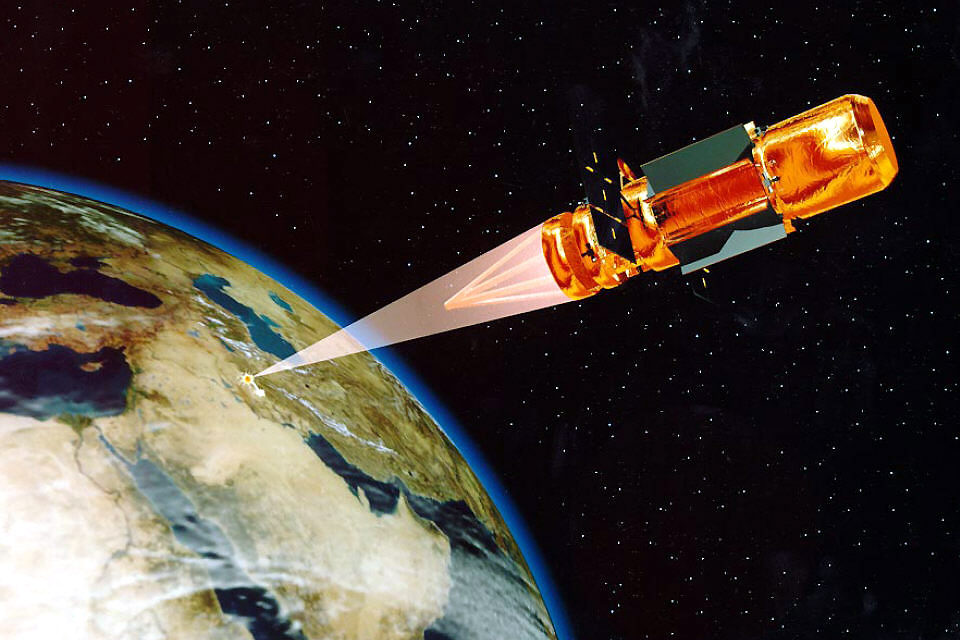
These weapons can involve satellites directly attacking other satellites, with projectiles, explosives, lasers or other methods. A satellite could physically grab and manipulate another satellite. Cyberattacks can incapacitate satellites or wrest control away from their operators. Space weapons could also affect life on the ground, for example, by disrupting GPS services.
And space weapons have a long history. In 1962, the United States tested a nuclear weapon at high altitude, which incapacitated many of the satellites orbiting at that time. Soon thereafter, the 1967 Outer Space Treaty banned weapons of mass destruction in space. (Although, recently, the United States has alleged that Russia is testing technology needed to put a nuclear weapon in orbit.)
Multiple nations, including the United States, have also tested antisatellite weapons that can take spacecraft down by launching weapons from the ground or air. Worryingly, some types of space weapons could make orbits unusable, by strewing dangerous debris that can collide with satellites or anything else in its path.
Science News spoke with Roberts about what we know and don’t know about the weapons Meink referred to. The conversation has been edited for length and clarity.
SN: What do we know about these space weapons?
Roberts: When I saw this news, my first take was that it’s missing a lot of adjectives. The way we describe a space weapon is by its method of attack and the consequences of using that weapon.
So when I think about what a space weapon is, I think about questions like is an attack attributable — can others see who did it? Is it reversible, meaning the effects on the target can be undone? And will there be public awareness about whether it was successful or not? Could the attacker themselves determine if it was successful or not?
And could there be collateral damage, meaning other satellites or other space assets would be damaged or degraded? This is what I’m curious about for these U.S. weapons.
So, what kind of weapon do I think it is? I think it’s one where the benefits in those categories are greatest.
SN: Could it be connected to plans for the Golden Dome missile defense system, which would put missile interceptors in orbit?
Roberts: I had the same thought. Could this be that? Could this be something different?
The hint [Meink gave] of “space control” as an adjective is bothersome to me. I want more information. Are we talking about affecting your adversary’s ability to control their satellites? Are you saying the capability is for the United States to control another satellite? The use of the word “control” really sparks my thought processes. There are weapons where you can steal control away from someone else: cyberattacks, grappling, noncooperative rendezvous and proximity operations. I don’t know what the statement means in this context.
SN: Should we be concerned about space debris if these weapons are used?
Roberts: Some space weapons produce collateral damage. A fragmentation event produces nondiscriminate debris, meaning debris that will run into you no matter what your nationality is. But many, many satellite attacks, you can easily focus them on just your target. I would imagine the U.S. is talking about that. The U.S. is the biggest actor in space. They can’t afford to jeopardize the environment.
SN: How could someone attack another satellite without producing debris?
Roberts: Jamming it is the best idea here. If you’re jamming the signals with which a satellite receives or sends data, that means it’s not useful to its operator. But that doesn’t mean that it’s dead.
A lot of these attacks are targeting certain subsystems. Shining a laser at a satellite is particularly damaging to an optical or infrared sensor. If you think a satellite is taking pictures of Earth, like any spy satellite or reconnaissance satellite, you might be interested in disabling just that optical sensor.
SN: What might the repercussions of this announcement be?
Roberts: It really invites criticism from U.S. adversaries. The global community has been working for some time on preventing an arms race in outer space. It offers evidence to some who might claim that it’s too late.
Right now, states obfuscate. There’s evidence for Russia and China developing space weapons, testing them and demonstrating them. But largely they deny it. In most cases, they pretend they’re not doing anything at all. And the U.S. is taking a different approach. Instead of obfuscating it, they’re telling everyone.
Source: sciencenews.org