
By Foluso Adelaja, Editor
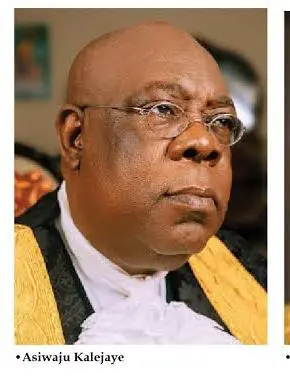
Asiwaju Kunle Kalejaye, SAN, a distinguished Ibadan based legal luminary has described as condemnable, the unmitigated manner some people destroy or appropriate public utilities which he said are the common wealth of all Nigerians.
Kalejaye SAN, who is also the Chairman of Eagle fm, Ilese Ijebu in Ogun State noted that public utilities, including water systems, electricity infrastructure, schools, hospitals, roads and other community facilities, constituted the foundation of socio-economic development, but lamented that some Nigerians often destroy or appropriate such assets soon after they are provided.
The legal practitioner raised the alarm over what he described as the growing culture of theft, vandalism and abuse of public infrastructure across Nigeria in a recent press release signed by him, warning that the trend is undermining development and hurting the very communities government projects are designed to serve.
Kalejaye, in the public intervention treatise said the manner in which citizens treat public infrastructure was an important measure of the health and advancement of any society.
He cited the reported disappearance of medical equipment and other items recently donated to Umaisha General Hospital in Toto Local Government Area of Nasarawa State as a disturbing example of the challenge.
According to him, an APC lawmaker representing the Ugya/Umaisha constituency, Hon. Ibrahim Abdullahi Sa’ad, donated 50 orthopaedic mattresses, 50 ceiling fans and more than 40 standing fans to the hospital to improve patients’ care.
Kalejaye said the lawmaker reportedly returned weeks later for a follow-up assessment only to discover that the donated items were no longer available, with allegations that some hospital personnel had sold them.
He stressed that if established, such conduct would go beyond ordinary administrative misconduct, describing it as an indication of a deeper crisis of stewardship and accountability in the management of public resources.
According to the legal practitioner, the problem is not limited to hospitals or government employees but extends to the deliberate vandalisation of electricity facilities, roads, drainage systems, water infrastructure and other public assets.
He referred to a viral video purportedly showing youths breaking newly constructed concrete walkways and drainage covers in an attempt to remove embedded iron reinforcement rods for sale as scraps.
He also cited the reported arrest of suspects over the alleged removal of iron rods and structural cables from beneath the Festac-Alakija Bridge in Lagos, saying such incidents illustrated the scale of the threat posed by infrastructure vandalism.
Kalejaye argued that the underlying mentality in both cases was similar: public property is often treated as though it belongs to nobody and can therefore be appropriated for personal benefit.
He linked the attitude to what he described as the “national cake” mentality, under which government property is perceived as an inexhaustible pool of resources rather than assets created with public funds for the benefit of citizens.
He said the situation was worsened by weak supervision, poor inventory systems, inadequate monitoring and the perception that offenders could escape meaningful punishment.
“When public workers and street vandals realise that inventory is rarely audited, supervisors can be compromised and law enforcement rarely prosecutes public-property theft, criminal behaviour naturally becomes normalised,” he argued.
The consequences, he noted, are ultimately borne by ordinary Nigerians, particularly the poor and vulnerable.
According to him, patients are forced to endure uncomfortable conditions when hospital equipment disappears, while vandalised roads, walkways and drainage systems expose pedestrians and motorists to avoidable dangers.
Beyond the immediate consequences, Kalejaye warned that vandalism and theft also impose additional financial burdens on governments, which must repeatedly replace damaged or stolen infrastructure instead of deploying scarce resources to new projects.
He further argued that persistent abuse of public facilities could discourage individuals, organisations and lawmakers from making donations to public institutions for fear that such interventions might be mismanaged or stolen.
To reverse the trend, Kalejaye advocated a combination of civic education, stronger community participation, improved institutional oversight and effective enforcement of existing laws.
He suggested that local communities, traditional institutions and neighbourhood associations should have greater involvement in monitoring public assets located within their communities.
He also advocated unique identification and branding of public property to make stolen assets easier to trace and discourage their resale.
In recalling an anecdote involving Nobel Laureate Professor Wole Soyinka, Kalejaye said that while Soyinka was associated with the management of Oduduwa Hall at the University of Ife, now Obafemi Awolowo University, he reportedly devised an unusual measure to curb the disappearance of cutlery from the hall’s cafeteria.
According to Kalejaye, the cutlery was engraved with the words: “STOLEN FROM ODUDUWA HALL.”
He said the measure reportedly helped to reduce the theft, although he acknowledged that branding alone could not solve the larger problem of public-property theft.
“Your item is stolen and you say it is branded; it is only when you see your item that you can identify your brand,” he observed, underscoring the need for active monitoring alongside asset identification.
Kalejaye also called for stricter regulation of the scrap-metal trade to make it more difficult for dealers to purchase stolen public infrastructure materials.
He advocated a zero-tolerance approach to the diversion or destruction of public assets, stressing that offenders should face appropriate prosecution under the law.
He said public officials found culpable of diverting donated equipment or government property should be held accountable, while those who vandalise public infrastructure should equally face the full consequences prescribed by law.
Ultimately, Kalejaye said Nigeria’s development efforts could not succeed merely by constructing infrastructure without building a corresponding culture of responsibility among those entrusted with managing and using it.
He described public infrastructure as the physical expression of society’s collective investment and ambition, warning that its destruction amounted to an attack on the nation’s own future.
He urged citizens, public servants, community leaders and institutions to move away from the perception that government property was nobody’s property.
Instead, he said, Nigerians should see public assets as collectively owned resources requiring protection, maintenance and responsible use.
Only through such a culture of stewardship, he maintained, can public infrastructure deliver its intended benefits of improving living standards, strengthening communities and advancing national development.